Glossary of terms ~ to help you interpret the world of rennet
IMCU is short for International Milk Clotting Units and is the unit measurement and expression of ‘strength’ of rennet
Single strength rennet is in the range 280 to 300 IMCU
Double strength rennet is in the range 560 to 600 IMCU
Casein – the main family of milk proteins accounting for 80% of the protein in cow’s milk
Chymosin – an enzyme that breaks down the main casein proteins in milk to form a solid curd. It cleaves a particular casein and continues to work as a cheese matures, breaking down those bonds that it missed during renneting.
Pepsin – an enzyme that breaks down or cleaves a particular casein protein in milk. In simple terms it works on a casein protein not touched by chymosin and in so doing increases cheese yield and flavour complexity. Pepsin continues to work as a cheese matures, breaking down more protein bonds and developing flavour.
United States Gallon = 3.8 litres ) Useful measurements to know
Imperial gallon = 4.5 litres ) when translating recipes
The Loss of New Zealand Made Rennet
Sadly, New Zealand no longer manufactures animal rennet. This includes our beloved Renco Rennet used to make to make what I would argue is a Kiwi Icon – Junket. This rennet was truly wonderful; of low strength (65 IMCU) so useful for soft cheeses like cream cheese that need the tiniest amount of rennet and indispensable for home cheese makers who wanted to make small amounts of cheese. The stronger rennet (280IMCU) is also no longer being made. Both rennet’s were good quality natural calf rennet.
The global market for natural calf rennet has shrunk dramatically, with many large cheese manufacturers switching to other forms of rennet that better meet their needs and are more readily available. This is not a criticism, just a switch in the market. These products are very strong, making them unsuitable for home cheese makers working in small batches, where the required quantities of rennet are too small to measure accurately. It should be noted that New Zealand has artisan cheese makers who still prefer to use natural calf rennet and you can seek them out.
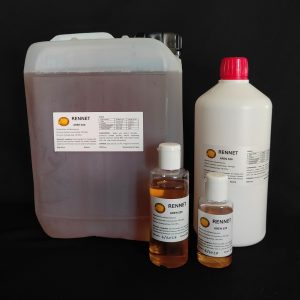
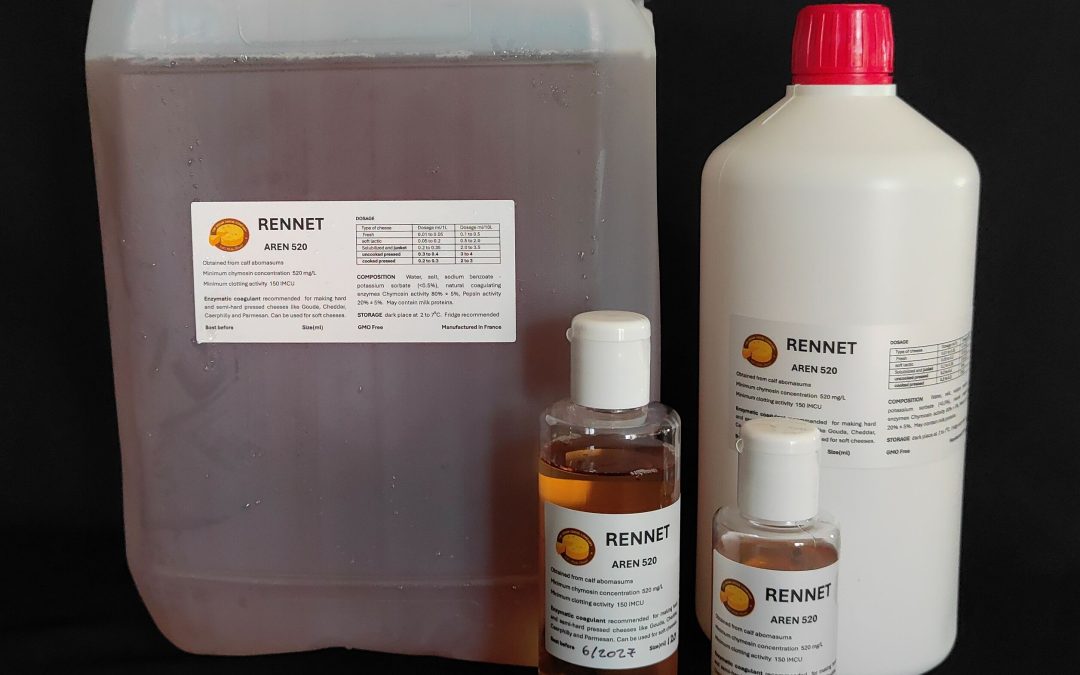
Here at the Urban Cheese Company, we believe in the benefits of using natural calf rennet for cheese making so we have gone to great lengths to source a consistent supply of natural calf rennet that comes from Europe. We are importing two products: Rennet Berthelot 180 which we have labelled D-Ren (short for dilute rennet) and Aren 520, both very natural products that are made in a very traditional way using slow maceration to release quality enzymes. The result is a higher yielding rennet than a chymosin only rennet, that continues to develop a great depth of flavour as a cheese matures. Both products are straw coloured, a nod to their natural manufacturing process and composition, plus the amount of added preservative is minimal too and well below that allowed under NZ Regulations. D-Ren is a replacement for Renco rennet 65 IMCU and Aren 520 is a replacement for Rennet 280 IMCU. Both rennet’s contain only the chymosin and pepsin enzymes naturally present in the abomasum of calves. Their composition is as follows:
D-Ren
Minimum chymosin content 180 mg/l with activity 85% +/- 5%
Pepsin activity 15% +/- 5%
PH 5.6 +/- 0.2
50 IMCU (close enough to 65 IMCU that no need to adjust dosage)
Aren 520
Minimum chymosin content 520 mg/l with activity 80% +/- 5%
Pepsin activity 20% +/- 5%
PH 5.6 +/- 0.2
150 IMCU (to replace rennet 280 IMCU x 2/double the dose rate)
So now to delve a little deeper into rennet, as not all rennet’s are made equal. They vary in both strength and composition
Strength
Not all rennet’s are equal in strength, so for comparison their strength is expressed in IMCU. A cheese recipe or recipe book should state the strength of rennet on which the recipe is based. Sadly, this information is sometimes absent or tucked away in an obscure part of the book and easily missed, yet it is essential if you want to calculate the correct dosage. One major reason is that different countries have traditionally used different strengths of rennet in cheesemaking, and each has built its traditions, knowledge, and recipes around what was locally available. As a result, the strength of the rennet used in a recipe is often treated as assumed knowledge and not specified. Globalisation has widely disseminated cheesemaking information, but recipes from one country are not always directly transferable to another.
I have noted that many cheese making recipes that people are using in New Zealand originate from North America and many recipes written in other countries hail back to North American recipes too! This area has a strong Homesteading tradition where home cheese making is common, and recipes are written in English so are easily accessible to us. North American recipes often call for single or double strength rennet with no explanation of what this means, so this will help:
Single strength rennet has an IMCU of 280 to 300 IMCU
Double strength rennet has an IMCU of 560 to 600 IMCU
Now that New Zealand has lost its traditional rennet you may have to review your recipes. We have tried to make this process easy by importing the Berthelot 180 which can be used as a direct replacement for Renco rennet, and you need to double the amount of Aren 500 that you use to replace 280 IMCU calf rennet.
Composition – and a quick word on how rennet coagulates milk into curds and whey
The enzymes present in rennet influence the yield and flavour of your cheese. Casein is the main family of milk proteins. They account for 80% of the protein in cow’s milk with some variation in sheep and goat milk where they account for a little less. Chymosin is the main enzyme in rennet that breaks down (cleaves) the main casein protein in milk to form a solid curd. It cleaves most of a particular casein protein quickly and continues to work on the remainder that it has missed during renneting as the cheese matures. The enzyme Pepsin cleaves a different casein protein in the milk. In simple terms it works on a casein protein not touched by chymosin and in so doing increases cheese yield by forming more curd and also adds more flavour complexity too. Pepsin continues to work as a cheese matures, breaking down more protein bonds and further developing flavour. This is why a rennet composed of chymosin alone gives a more consistent but monotone cheese, both texture and flavour wise, and why a rennet containing pepsin is perfect for making flavourful cheese that develops complexity as it matures. Home cheesemakers have the luxury of not needing to produce a perfectly consistent cheese so can use a rennet containing pepsin and enjoy the variation that develops as our cheese matures over time.
We will also be importing a goat rennet, but more about that later 😊